 Canada
 U.S.A

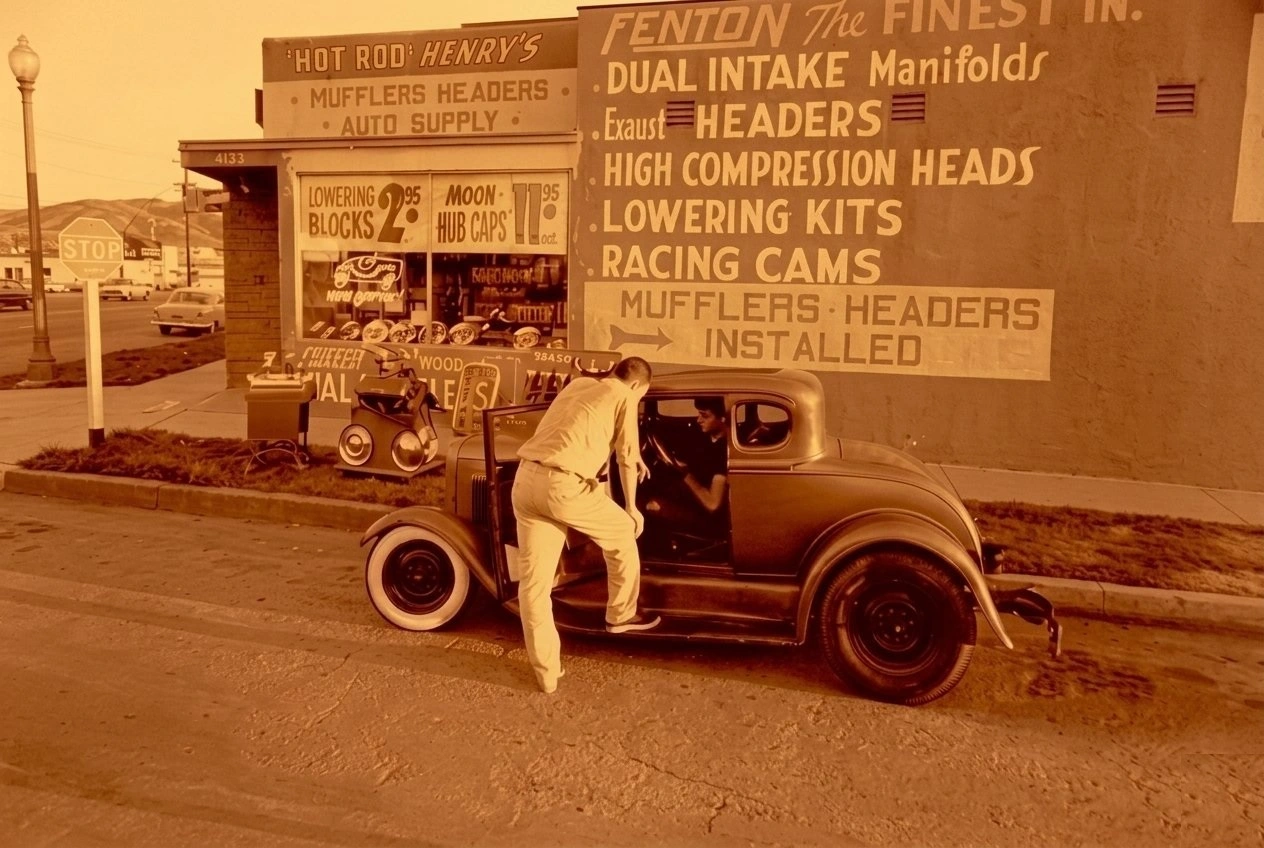

Long before digital storefronts, algorithmic recommendations, and instant online tracking numbers transformed the automotive industry, hot rodding had a physical, beating heart. The local speed shop was the ultimate sanctuary for horsepower enthusiasts from the late 1950s straight through the roaring 1970s. Stepping through those grease-stained glass doors meant entering a world where retail met raw mechanical obsession. Showrooms were packed tight with polished intake manifolds, chrome valve covers, and the unmistakable, sharp scent of racing fuel mixed with brand-new rubber tires.
These independent stores were far more than simple parts counters; they were the true regional hubs of American performance culture. For gearheads wrenching on early flatheads, small-block Chevys, or high-compression dragsters, the speed shop was where blueprints became reality. It was an era when a builder’s knowledge wasn't pulled from an internet forum, but rather earned through trial, error, and long conversations with the seasoned veterans working behind the counter. From small-town main streets to the legendary drag-strip corridors, these shops fueled the golden era of custom car building.
You didn't just buy a camshaft or a set of headers; you bought the advice, the street talk, and the mechanical wisdom that came with them. That counter guy was your search engine.
A Veteran Street Rodder
The Blueprints of Speed and Main Street Sanctuary
During the peak of the muscle car movement in the 1960s and 70s, speed shops grew from niche garages into local landmarks. Icons like Vic Edelbrock, Mooneyes, and thousands of nameless mom-and-pop storefronts provided the physical components that defined generations of speed. If you wanted to turn your street cruiser into a strip-tearing gasser, the speed shop catalog was your bible, and the showroom floor was your paradise. Builders would crowd around glass display cases to marvel at the latest dual-quad setups, Hurst shifters, and magneto ignitions.
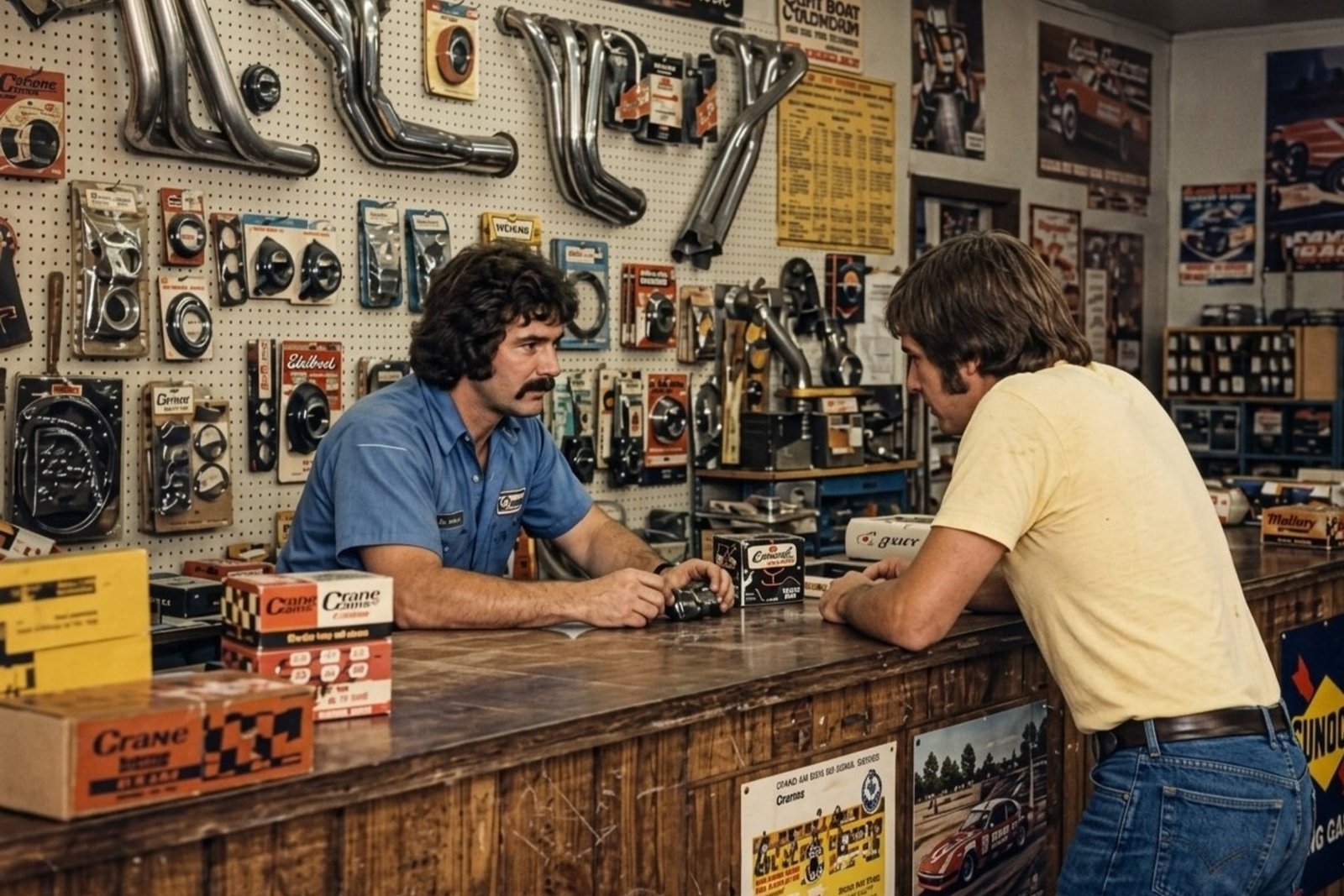
As Friday night approached, the local speed shop inevitably transformed from a retail store into a bustling staging ground for weekend warfare. Main street cruisers and drag racers would gather in the parking lot, tailgates dropped, trading tuning secrets and checking out each other's latest mechanical upgrades. It was an inclusive, deeply immersive sensory experience where the shared language was measured strictly in cubic inches, compression ratios, and quarter-mile elapsed times.
For many young builders of the era, saving up enough cash from a summer job to finally buy that coveted chrome air cleaner or set of swap-meet headers was a true rite of passage. These shops democratized performance, giving anyone with a toolbox and a dream the exact parts needed to challenge factory muscle. The legacy of these physical spaces captures the absolute pinnacle of custom culture, showing just how deeply intertwined these businesses were with the growth of American car styling.
Preserving the Soul of Hot Rodding
What truly separated the mid-century speed shop from modern digital warehouses was the irreplaceable element of community mentorship. It was a space where seasoned track mechanics passed down historical garage wisdom to wide-eyed teenagers, teaching them how to read spark plugs and dial in a finicky carburetor. This face-to-face connection created a vital bridge, establishing a foundation that kept the international collector car community thriving across decades and borders.
While the digital age brought unparalleled convenience and next-day shipping, it also quieted the loud, vibrant spaces where hot rodding culture originally found its voice. The spirit of those vintage speed shops lives on every time a classic car fires up or a caravan of chrome rolls down the highway. They weren't just selling parts to make cars go faster; they were building the very foundation of a timeless American lifestyle that continues to roar loudly into the modern era.